Energy label for retail – collaboration Michiel Laurense
Energy label mandatory for retail: what does it mean for retail?
The energy transition is also affecting the retail sector more and more emphatically. Where the focus has long been on offices and homes, it is now the turn of retail properties. New European regulations, translated into national legislation, introduce a stricter energy label requirement specifically for retail properties. This has direct consequences for retailers, property owners and investors.
When must an energy label be presented?
For monuments, the obligation for an energy label (when renting and/or selling) starts on May 29, 2026. The obligation for existing other properties has been in place for some time, but here a tightening is taking place. When letting/selling there is an obligation to be able to present a label(by the owner). When renting out, for example, the mention of an energy label is mandatory in advertisements. In addition, in many cases an energy label must also be physically present.
| Type of Premises/Situation | Physical hanging mandatory? | Handing over mandatory? |
| Store > 250 m² | Yes, in a visible location | Yes, with new tenant/buyer |
| Store < 250 m² | No, is allowed | Yes, with new tenant/buyer |
| Monument (> May 29, 2026) | Yes, if > 250 sq. ft. | Yes, with new tenant/buyer |
| Office above store | Public space only | Yes, with new tenant/buyer |
Linking models and energy label
The upcoming energy label requirement for retail requires preparation. By gaining insight into the energy performance of your store(s) now and linking this to maintenance, renovation or redevelopment plans, you can avoid surprises and create room for smart choices.
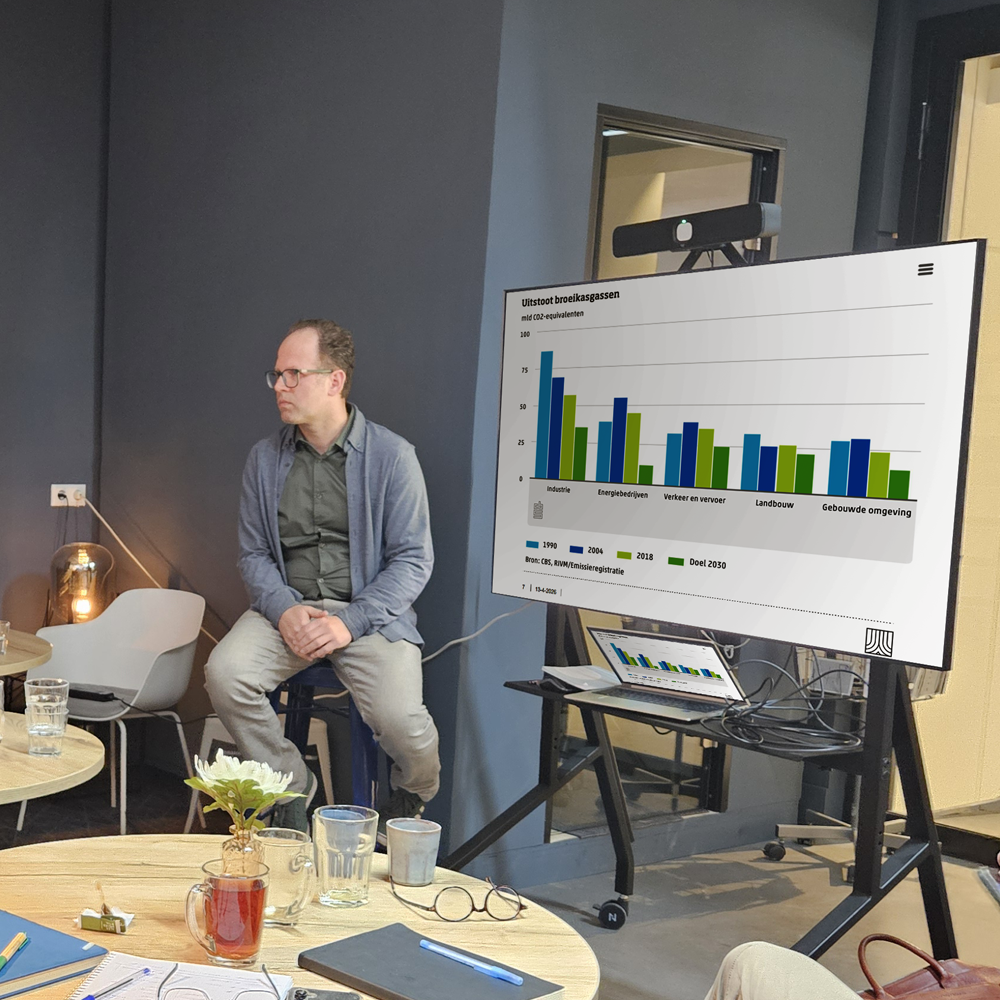
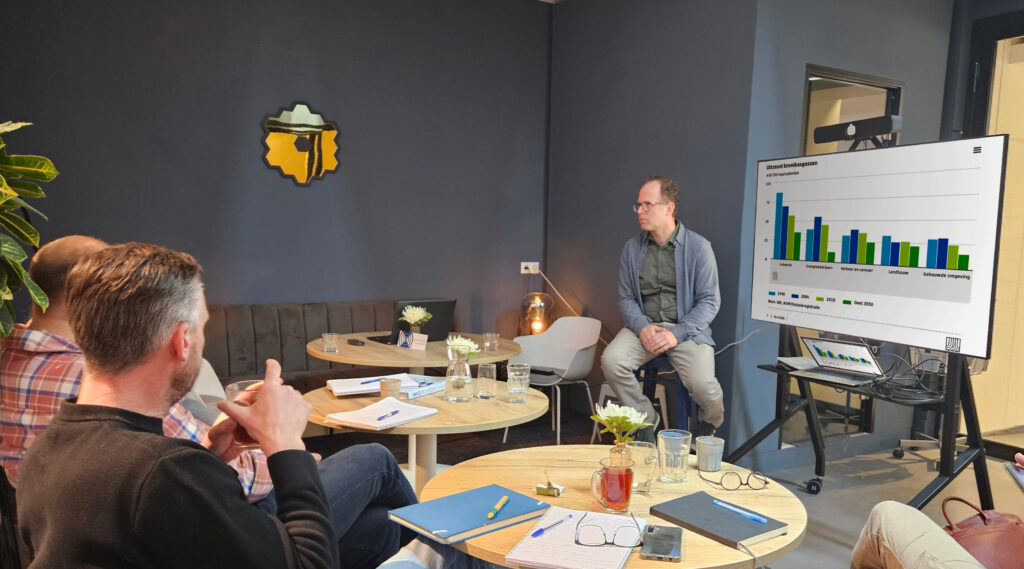
Anticipating now makes sustainability manageable and profitable. NewArmstrong has anticipated this by partnering with Michel Laurense, of Laurense Energie Advies. This allows us to quickly deliver a BENG calculation or an Energy Label for our projects. By supplying input from our design models, Michiel Laurense can advise on adjusting whether the design will achieve the correct energy label or whether we need to make adjustments. To explain how we should deliver this, Michiel gave a training at NewArmstrong on the backgrounds of the BENG and what exactly is calculated. Because of that training we know what we need to deliver to quickly make a calculation of plans in the design phase.
Why an energy label for retail?
The new energy label requirement for retail stems from European climate goals. The built environment plays a crucial role in reducing CO₂ emissions and energy consumption. Retail premises – often intensively used and with a lot of lighting and installations – offer great savings potential in this regard.
The energy label provides insight into the energy performance of a store and looks at, among other things:
- insulation and building envelope
- lighting and installations
- ventilation and heating/cooling
- use of renewable energy
These factors combine to determine how energy efficient (or not) a storefront is.
Specifically, what will change?
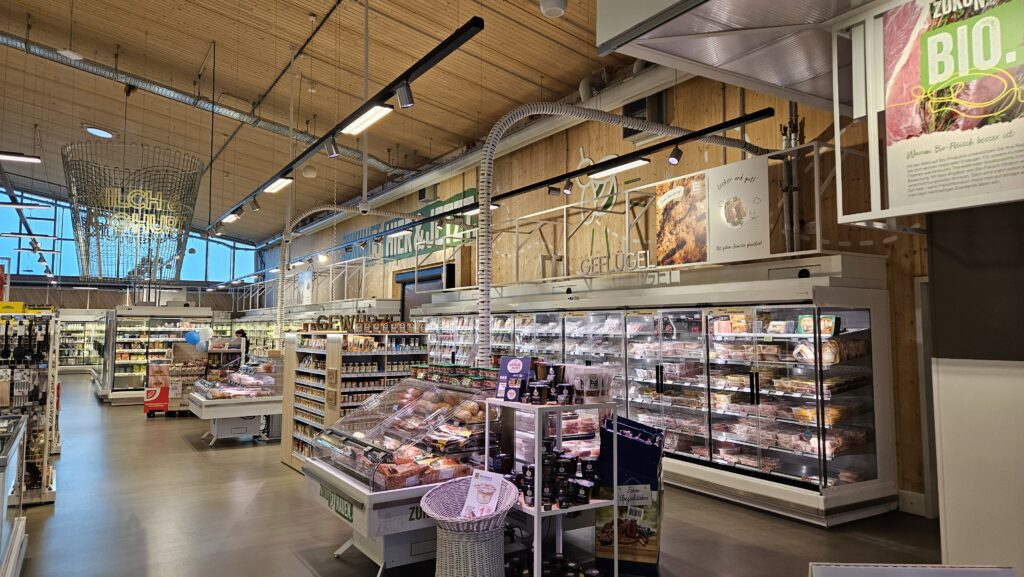
Edeka Berlin, Germany’s most sustainable supermarket with a water-cooled system for all refrigeration.
With upcoming legislation, retail properties will be mandatorily rated according to new, more stringent criteria. Each property will be rated based on energy performance. This label will not only become relevant when selling or renting, but will also have an increasing impact on:
- the market value of the property
- rentability
- operating costs
- and attractiveness to brands and consumers
Retail properties that fail may face future restrictions, additional investment obligations or loss of value.
Challenge and opportunity for retailers and property owners
For many existing stores, this means a challenge. Not every building immediately meets the new requirements, which may require preservation measures. Consider:
- energy-efficient lighting
- improvement of insulation
- more efficient plants
- smart design choices when renovating or restyling
At the same time, the energy label requirement also presents opportunities. Investing in energy efficiency often leads to:
- lower energy costs
- more comfortable stores
- a future-proof building
- stronger positioning toward tenants and consumers
Energy label as a strategic part of retail strategy
More and more retailers and property owners no longer see sustainability as a legal burden, but as a strategic tool. A good energy label aligns with:
- ESG goals
- CSRD reporting requirements
- brand positioning and customer experience
- long-term value of the property
Moreover, the demand for sustainable stores is growing: consumers, brands and investors increasingly value demonstrably sustainable locations.
Start on time
To map large portfolios, starting on time and having the right process is important. NewArmstrong is very adept at controlling processes for large portfolios where the same process steps need to be followed for many locations. Through an established process, process locations uniformly, without loss of overview or quality; with a manageable result.