Lay Out and Experience at Summa College
From layout to experience
How satisfiers and dissatisfiers determine the success of a store design
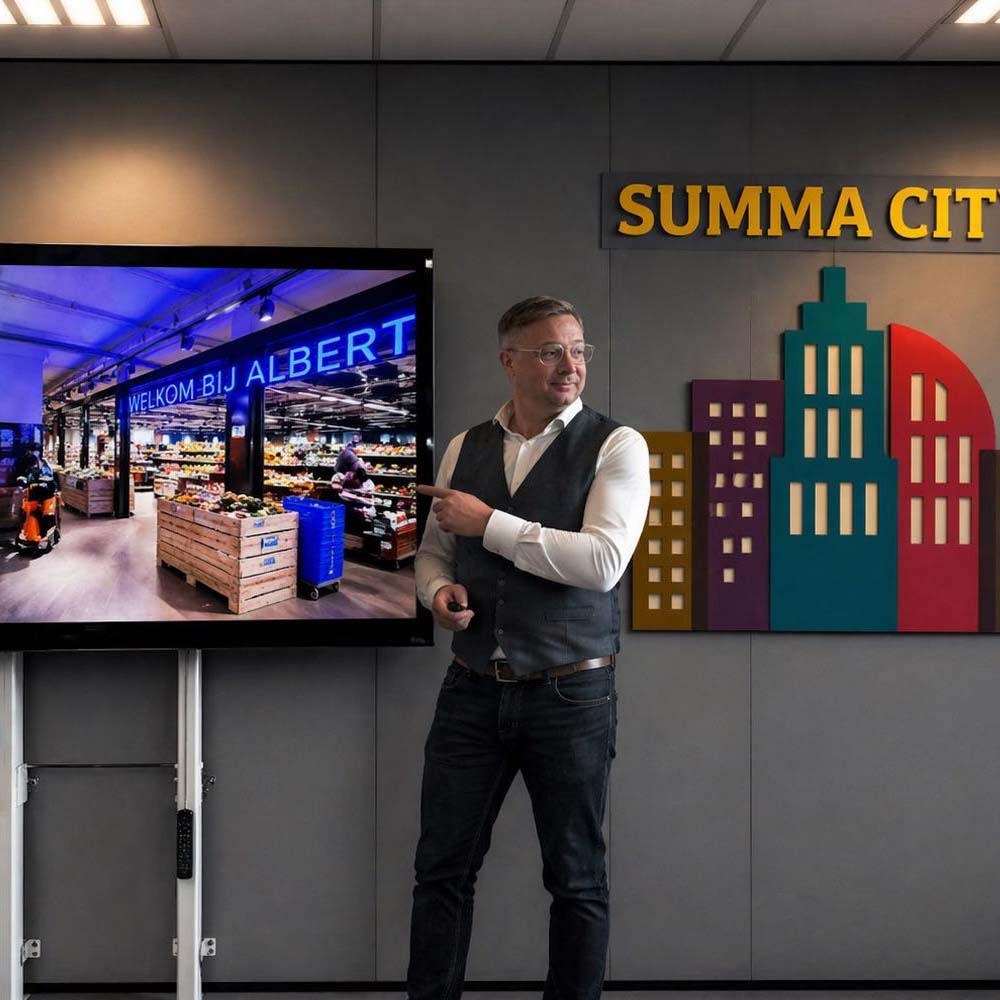
During a recent Summa City day at Summa College, students worked on designing their own virtual store.
What struck me: as soon as you really start thinking from the customer’s perspective, layout changes from a technical issue into a strategic instrument.
A good store layout is not neutral. It makes shopping easier, more pleasant and sometimes even more fun – or frustrating. In retail design, therefore, we talk about satisfiers and dissatisfiers within a layout.
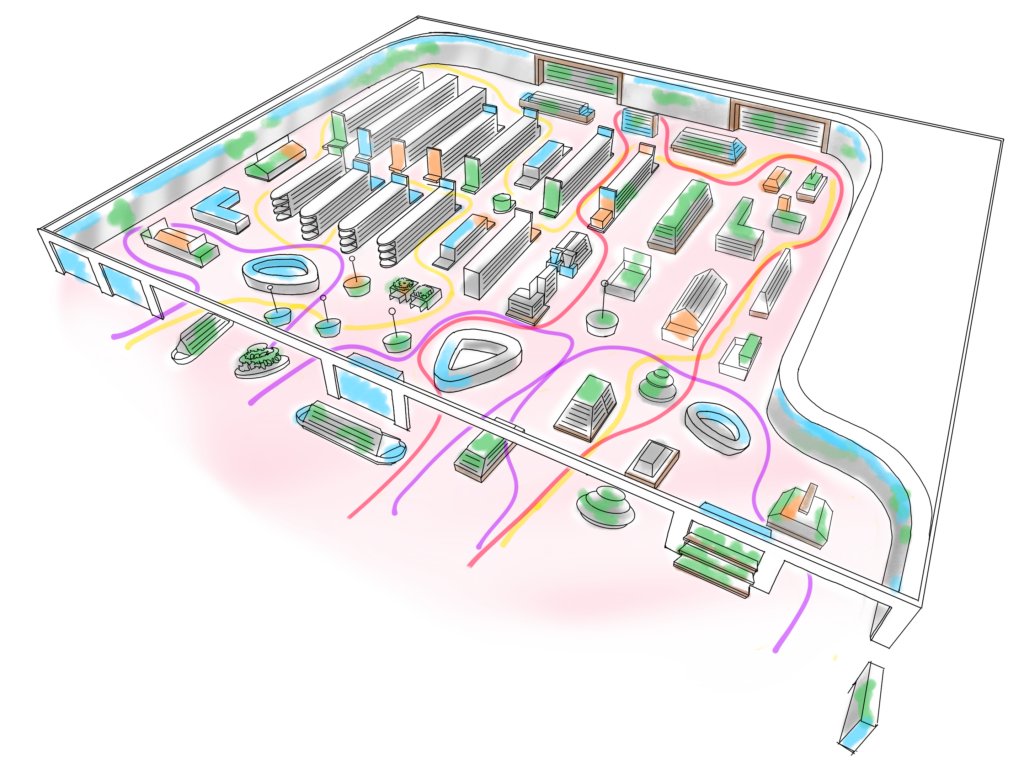
What do we mean by satisfiers and dissatisfiers?
In essence, it is about this:
Satisfiers enhance the shopping experience. They create calm, overview, flow and confidence.
Dissatisfiers break down that experience. They create irritation, confusion or mental fatigue.
Important to understand:
👉 Satisfiers rarely produce explicit compliments.
👉 Dissatisfiers do cause immediate disengagement, faster departures or lower spending.
In other words, you lose sales faster because of a bad layout than you gain additional sales with a “pretty” store.
The basics: layout as behavioral control
Any retail layout – whether grid, free-flow or hybrid – drives behavior. Customers are constantly making unconscious choices:
- Where do I walk?
- Where do I look?
- Where do I slow down?
- Where do I drop out?
During Summa City, students saw how small design choices have big effects on those decisions.
The main dissatisfiers in layout design
These are common layout errors that directly undermine the shopping experience:
1. Unclear routing
When a customer does not intuitively understand where the store “goes,” turmoil ensues. Too many choices or dead-end paths increase cognitive load.
Result: shorter length of stay and less exploration.
2. Paths too narrow
Functionally perhaps efficient, but disastrous for comfort. Especially in supermarkets or busy times, this creates stress and social friction.
Consequence: leaving faster, lower spending per visit.
3. Over-stimulation at entry
No decompression zone, immediate action, screaming signage or full gondolas at entry.
Result: customers miss orientation and scan fewer products.
4. Inconsistent logic
Product groups that do not logically follow one another or varying principles per aisle.
Result: “search stress” – and search stress is buying inhibitor.
The power of satisfiers in a smart layout
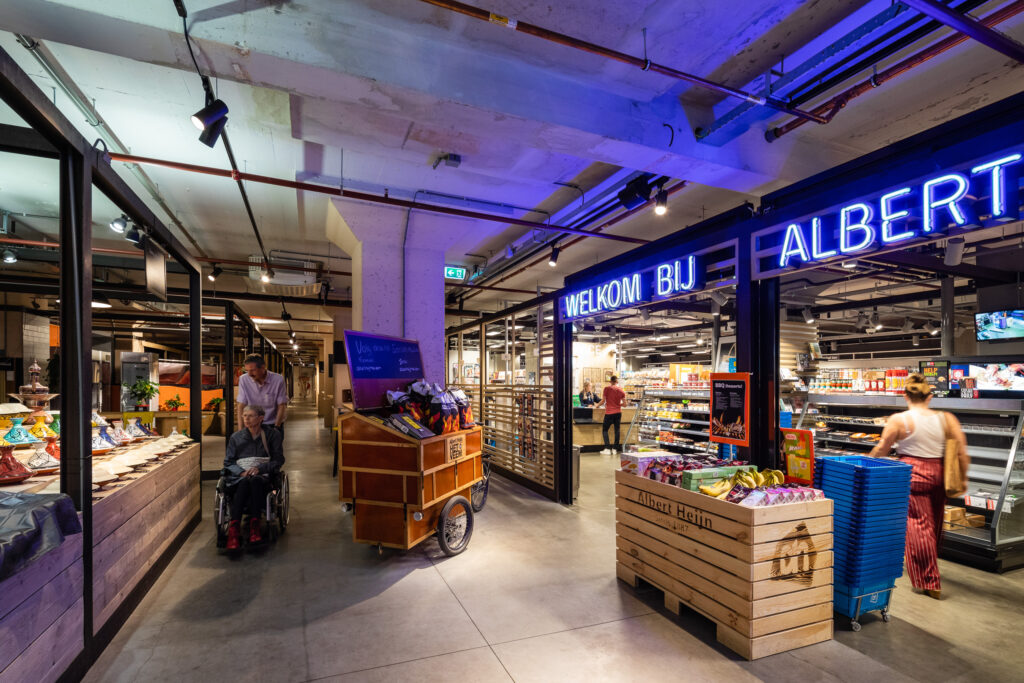
In contrast, there are elements that hardly stand out, but are crucial to success:
1. Logical main route
A clear “spine” in the store provides a foothold. Customers feel free, but unconsciously guided.
Effect: more rest → longer length of stay → higher likelihood of impulse purchases.
2. Visual vistas
Lines of sight to key areas (fresh, promotions, service points) give confidence and curiosity.
Effect: better orientation and better distribution through the store.
3. Rhythm in design
Alternate between open and closed areas, low and high furniture, focus and relaxation.
Effect: shopping feels less tiring.
4. Consistent signature
When layout, furniture and signing tell one story, the customer has less to think about.
Effect: cognitive calm = buying comfort.
From theory to practice: why this works in education and retail
At Summa City, it became clear how valuable it is to have students not just learn rules, but experience behavior. Designing virtually and justifying choices created an understanding of the bigger picture:
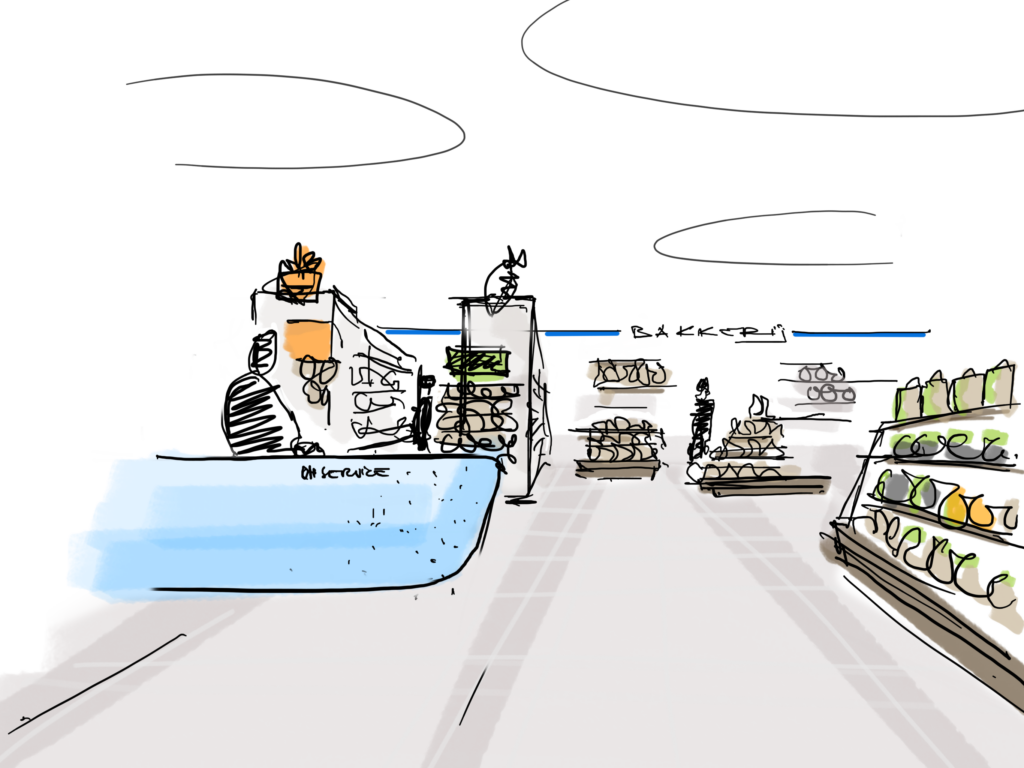
A good layout is not about “filling more meters,” but about creating less resistance.
That’s exactly what modern retail design is about.
Conclusion: you don’t see a good layout – you feel it
The best store layouts don’t stand out. They don’t irritate, they don’t require explanation and they don’t force anything. They support the customer’s natural behavior.
Or as we often summarize it in practice:
Design is not how it looks, but how effortlessly it works.